|
We collect basic website visitor information on this website and store it in cookies. We also utilize Google Analytics to track page view information to assist us in improving our website. |
CONTINUE |

 |
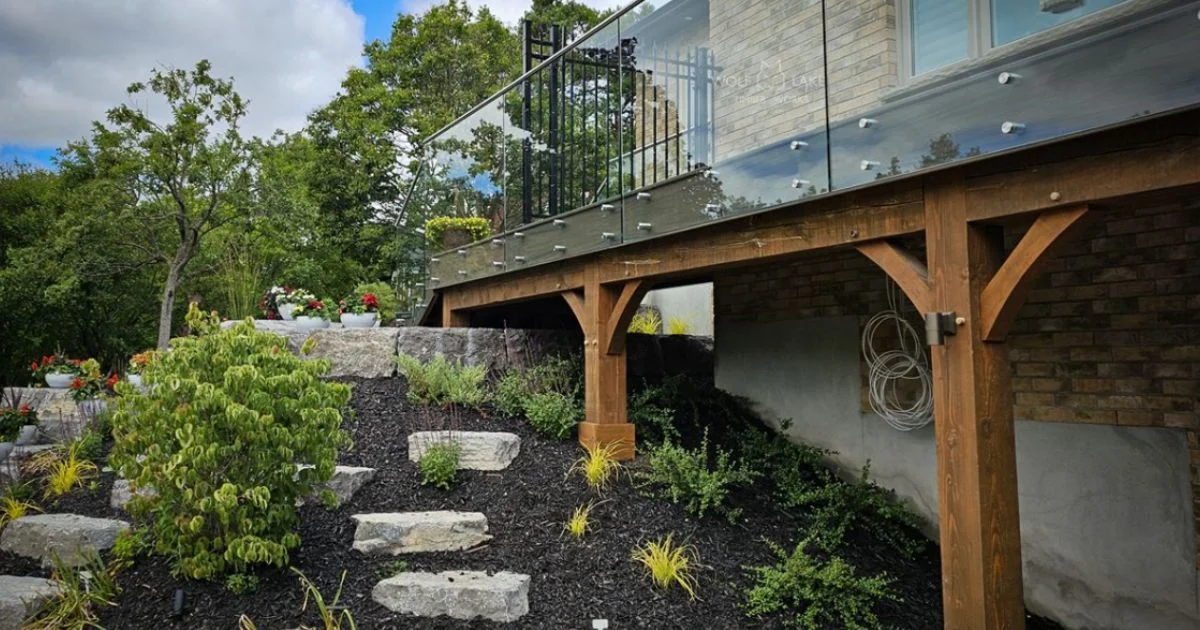
A common misconception about homes with wooden features is that there’s a risk of rot and reduced longevity. However, when you work with quality timber beams, you can actually add decades to your home’s lifespan.
Timber beams are not only economical, but they can be crafted to fit every home and every budget — provided you’re working with a reliable timber provider. Wolf Lake Timber Works uses high-quality Douglas fir timber for all our projects, ensuring that all our home additions and structures stand the test of time.
In this blog, we’ll explore how timber beams boost your home’s lifespan.
Timber beams (particularly high-quality, large timbers) provide your home with significant, lasting structural support. When applied correctly, they can handle significant weight and span across long distances, thereby reducing the need for internal load-bearing walls.
Timber beans are ideal replacements for conventionally framed porches that often rely on clad columns or vinyl caps. Our products are built from #1 grade, rough-sawn, free-of-heart-centre Douglas fir timbers. All our post-and-beam kits are designed to be easy to integrate, featuring authentic mortise-and-tenon joinery. When we install your timber beams, you don’t have to worry about visible hardware; our designs are crafted to have a seamless finish.
The key to ensuring the structural integrity of your beams is using engineered timber to enhance the project's strength and stability. Carefully engineered, high-quality timber is designed to resist warping, splitting, and even withstand environmental stresses.
All our beams are made from high-quality Douglas fir. This material is exceptionally durable and suitable for many architectural styles, both classic and modern. When you work with reliable timber professionals who hand-draw and craft a proper design, a timber frame home can last for hundreds of years. If you look at European timber structures from history, some of them have truly stood the test of time.
Unlike other construction materials (such as steel), timber doesn't corrode — although it does require some care occasionally to manage risks such as moisture, UV exposure, and pests. However, if you use carefully treated and high-quality timber, maintenance is far more manageable and less likely to be required regularly.
Carefully engineered timber beams are highly predictable in their performance and highly reliable, helping prolong the structure's longevity and overall safety. Carefully engineered timber beams are highly predictable in their performance, helping prolong the structure's longevity and overall safety. Douglas fir timber is particularly well-known for its strength and ability to handle heavy loads, making it a top choice for structural framing.
Not only this, but the timber frames from Wolf Lake Timber Works are also designed to withstand the elements — even some of the harshest in Canada.
Properly treated timber doesn't require frequent maintenance, but it is important to consider it for the future. Sealing and finishing exposed beams, monitoring moisture issues and rot, conducting insect inspections, and maintaining protective coatings as required will keep your timber beams in top shape.
Regular inspections can help you spot early signs of decay, cracking, or pest problems before structural damage occurs. Because timber is an organic material, ensuring that the wood is not only high-quality but also pre-treated is essential to extending its lifespan. You may also need to re-stain or re-seal the material down the road.
One of the beautiful things about timber is that it's a renewable material. When responsibly sourced, timber helps sequester carbon, storing it within the wood itself. Aditionally, due to its longevity, a timber beam-based home may have a lower environmental impact compared to other structures that require regular replacement.
Here are some key examples of the environmental efficiency of timber as a construction material:
Timber is a renewable building material sourced from sustainably managed forests.
Wood stores carbon throughout its lifespan, reducing overall greenhouse gas emissions.
Timber production uses less energy compared to steel or concrete manufacturing.
Engineered timber options make efficient use of smaller or reclaimed wood pieces, reducing waste.
Timber structures are lighter, which can lower transportation emissions.
Wood offers natural insulation, improving a building’s energy efficiency.
Timber is biodegradable at the end of its life cycle, reducing long-term environmental impact.
Did you know wooden materials like timber have their own natural insulating properties? Larger timber beams can help contribute to better thermal performance for your property and improve indoor temperature, saving on heating and cooling costs. The structure of timber framing (post-and-beam) also supports energy-efficient design, promoting temperature management.
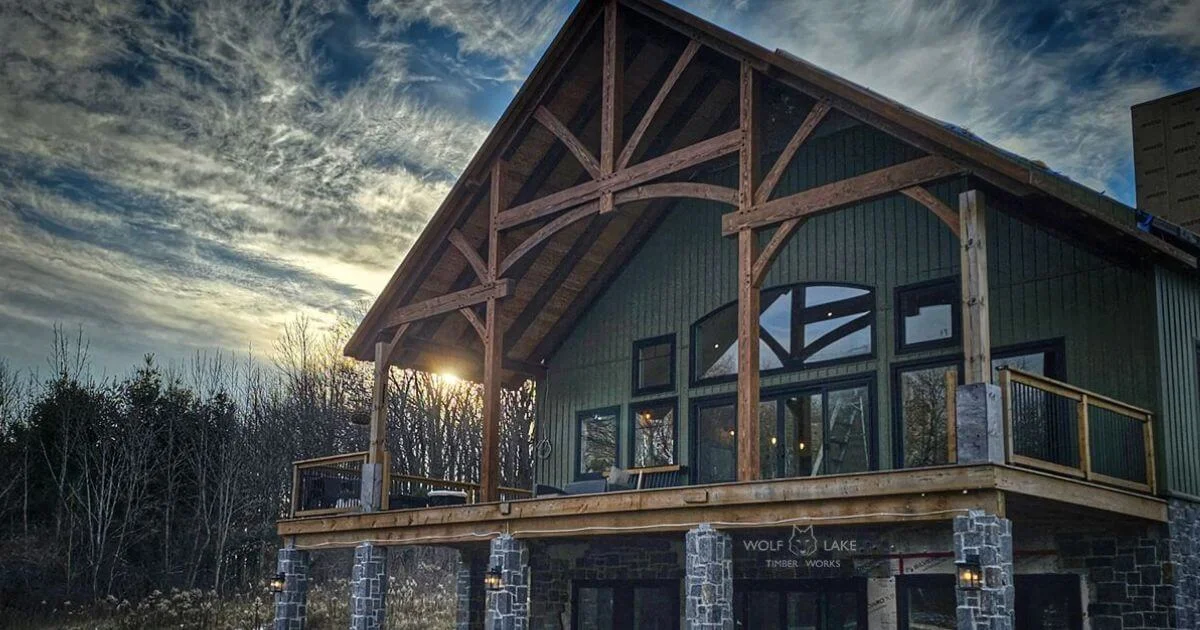
Douglas fir timber is not only durable, but it's beautiful to look at. It adds an element of character, warmth, and an architectural appeal that lasts for decades. Not only this, but timber frame construction allows for great flexibility, allowing for open floor plans, creative joinery, and custom architectural features.
Due to its versatility, you can rely on your timber beams seamlessly blending into an existing structure or a new one. This significantly increases your home's aesthetic and long-term value.
Timber is a highly flexible material, meaning that timber frame homes and structures are more resilient to additional environmental stresses (settling, environmental shifts, extreme weather shifts). This flexibility means timber construction can be retrofitted or modified more easily than other, more rigid materials, making it simpler to add new timber accents or complete renovations.
Timber has a colourful history across the globe, wherever accessible materials are available. As you can imagine, wood has long been a very abundant resource, providing construction materials for hundreds of years. Wood has long been regarded for its durability, strength, affordability, flexibility, sustainability, and its wonderful aesthetic.
A direct quote from the Canadian Wood Council records the history of timber structures as follows:
Now that we’ve explored a little bit of history, how about some fun facts about timber beams?
Timber beams can last for hundreds of years when properly maintained, which is why so many historic buildings still stand today.
Douglas fir, one of the most popular species for beams, is known for its exceptional strength-to-weight ratio.
Timber naturally insulates, helping regulate indoor temperatures better than steel or concrete.
Heavy timber construction chars on the outside during a fire, which actually helps protect the inner core from burning.
Many timber beams are crafted using traditional mortise-and-tenon joinery that dates back thousands of years.
Timber beams can be easily refinished or stained to match new design trends without replacing the structure.
Because timber is renewable, it has a lower environmental impact than most other structural materials.
Engineered timber beams, like glulam, can span longer distances than solid wood while remaining lightweight.
Each beam grain pattern is unique, giving every project a one-of-a-kind visual character.
Timber beams naturally dampen sound, making them ideal for open-concept and high-traffic spaces.
The team at Wolf Lake Timber Works believes in holding ourselves to the highest standard, providing the most stunning, high-quality timber frame structures and accents. We only use the most premium materials, stains, and techniques to ensure your timber beams help your home last well into the future. We hand-cut, stain, and sand all our projects and review every single step hundreds of times before your product is ever delivered.
Together, we’ll create memorable and long-lasting timber structures and accents. Our specialties include pergolas, pavilions, gazebos, entrances, homes, gable trusses, brackets, and more. If you want a beautiful, sustainable home that is sure to stand the test of time, contact us today.